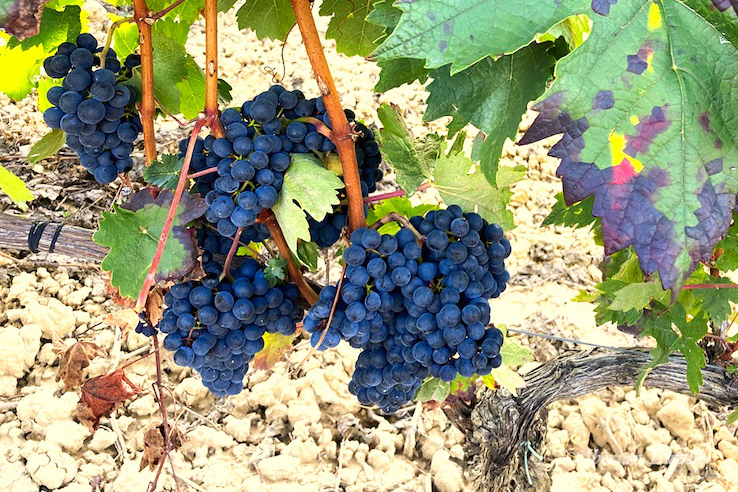
Valle del Tirón, La Rioja Alta
West of Haro, in the Valley of Tirón, you will find several small villages, some with castles and all with a long history of wine making; Anguciana, Ternero (Castile-León) Sajazarra, Fonzaleche, Cuzcurrita de Río Tirón and Tirgo. The Río Tirón joins the Río Oja near Cihuri, before flowing into the Ebro River near Haro. The Río Oja Valley, one of the seven valleys of the Rioja, is where the vineyards are at the highest elevation in the Rioja Alta, with the Tirón being the westernmost valley, and where the grapes take longest to mature. As every vineyard in the Rioja is either in the Ebro River Valley or in one of its seven tributaries, the result in biodiversity in the terroirs helps considerably to shape the flavor and style of the wines of this unique region.
This is an area popular with hikers because of its deciduous forests, streams and waterfalls, deep valleys and the northern peaks of the Sierra de la Demanda. For those up for a walk or bike ride there is a 27 km long Río Oja Greenway that runs from Casalarreina to Ezcaray, then connects to the GR 93 hiking trail from Ezcaray to the monastery of San Millán de la Cogolla, GR 93 – Etapa 1: Ezcaray – San Millán, 17,15 km.
Anguciana
The attractive little village of Anguciana, with its historic 14th-century castle, the Salcedo Tower or Torre Fuerte (strong tower), a Gothic fortification built near the 18-century Tirón bridge, and 16th-century Iglesia de San Martín church, straddles the banks of the Tirón River a few minutes west of Haro on the LR-202. The village’s historic quarter has been nicely restored. On April 29 they celebrate the martyr San Pedro de Verona. For lunch in the area you will have to drive to Lumbre Restaurante or La Vieja Bodega in nearby Casalarreina, or head back to Haro.
Bodega Akutain
You’ll find this small family winery opened by Juan Peñagarikano Akutain, which has been making wines from their own 6.5 hectares of vineyards for over 40 years, in what was once an abandoned horse stable on the Camino “la Manzanera”, just across Río Ea from Anguciana. Today his son Jon oversees the production of their artisanal wines that are produced old “château style”, in small quantities.
Bodegas Olabarri
Located just outside Haro on the LR-202 in the direction of Anguciana, the winery was founded by Pablo Olabarri Bikandi in 1985 in an old bodega on Calle las Bodegas in Anguciana, he decided to open a much larger, modern facility on the road to Haro in 1989. The new winery holds 4,000 barrels and up to 800,000 bottles, while the original 19-century bodega only has a capacity of 600 barrels. The family owns or controls up to 115 hectares of vineyards in La Puebla, Cenicero (50-year old bush vines), El Campillar, Assa and Haro (40-year old bush vines). The winery is in the hands of his son, Luis Olabarri.
Bodegas Diez del Corral
This family winery has been producing fine wines since 1880 from vineyards which lie between the Valle del Tirón and the Montes Obarenes. Their largest vineyard, at 3.7 hectares, is located in the village of Anguciana.
Ternero
Not a village, but a wine-estate located in a small section of Castile-León which sits within the western limits of the Rioja and was once a Cistercian monastery.
Hacienda El Ternero
This unique winery-estate dating from the late 11th-century when it was part of the Cistercian monastery of Santa María de Herrera, lies along the route of Saint James, a short 20-minute drive west of the Barrio de la Estación in Haro. Although officially part of the Castile-León province, it’s location, a unique microclimate in the foothills of the Obarenes Mountains, places it on the western edge of the Rioja DOa. Tempranillo grapes for their Picea 650, hand picked from the 60 hectares of vineyards located at the highest elevation of the estate, 650 meters, one of the highest vineyards in the Rioja Alta, are fermented in new French Oak.
Sajazarra
This medieval farming hamlet of Sajazarra, “Lake of Flowers” in Arabic, sits along the banks of the Ea River. With narrow, cobblestone streets and a 14th-century castle, it is one of the best preserved in the Rioja and listed as one of the most beautiful villages in all of Spain. Surrounded by vineyards, it was one of the five villages founded by the Brotherhood of Álava. The 12th-century Church of La Asunción sits next to the castle, while the restored 8-room 19th-century inn, Posada de Sajazarra, is located in the village square, behind a grand old oak door. The festival of San Marcos, the patron saint, is celebrated on April 25 and the festival of the Virgen de Cillas at the end of August.
If you plan on being in Sajazarra around lunch time, then you can try Asador Ochavo in the center of the village. It has two dining rooms, a lovely terrace and an excellent selection of local wines.
Bodegas Señorío de Líbano
You’ll find the impressive 14th-century Castillo de Sajazarra in the small historic fortified village of Sajazarra (150 population), where the Aguanal and Ea Rivers meet. Obtained by the Líbano family, they restored the castle damaged in the battles between the medieval kingdoms. While restoring the castle, they acquired some vineyards on the slopes of the Obarenes Mountains at 700 meters, one of the highest points in the Rioja, producing their first wines in 1973. The aging cellar holds 2500 casks of American and French oak, while the winery is surrounded by 48 hectares of vineyards. The Castillo de Sajazarra is not open to the public but the vineyards around the winery and the village, considered one of the prettiest in La Rioja, are well worth a visit.
Bodega Alegre Valgañon
The small urban winery of the Alegre-Valgañón family, opened in 2019, is located in the village of Sajazarra. Most of their 15 hectares of vineyards lie along the slopes of the Obarenes Mountains, Los Montes Obarenes, to the west of Haro, with plots centered around Fonzaleche, a small village on the LR-302, just off the road from Miranda de Ebro and other plots in Cihuri, Cellorigo and Villaseca. Both oenologist, Eva Valgañón and Oscar Alegre opened their first winery in 2010 after nine years of producing wines with Mikel Zeberio; winemaker, sommelier, food and wine writer, and other friends. Following the lead of their ancestors, they include stems during fermentation, allowing wines of greater purity and expressiveness. Producing their first vintage in the traditional method in 2014, they offered something unique in today’s Rioja.
Bodegas Puente Del Ea
Located along the Ea river a few minutes south of Sajazarra on the Camino de Aguachal, 10 km from Haro, the French Château style winery was founded in 2001 and is surrounded by 4 hectares of Tempranillo vineyards. Directed by Rodrigo Madrid since 2006, along with winemaker Julien Viaud, they produce both classic and modern wines.
Fonzaleche
This picturesque farming community of Fonzaleche, with less than 180 inhabitants, sits atop a knoll a few minutes drive west of Sajazarra on the LR-302, near where two Roman roads once crossed, and is the last village on western edge of La Rioja. The 11th-century parish church, Iglesia de San Martín, is one of the oldest in the area and where, on November 11, they celebrate San Martín. The pilgrimage to the Virgin of Junquera hermitage is on the Saturday following the feast of the Ascension of the Lord. The village festival is the third weekend in September.
For lunch in the area you can check out Bodegas Bohedal in Cuzcurrita de Rio Tiron, La Vasca in Miranda de Ebro, a Bib Gourmand and recommended in the Repsol Guide 2024. Alejandro Serrano and Erre de Roca, also in Miranda de Ebro, have one Michelin star each. Alejandro de Bayas in Miranda de Ebro is more moderately priced, offering a daily menú del día.
Bodega San Martin de Ábalos
Founded in the rolling foothills of the Obarenes mountains, one of the northernmost areas of La Rioja, in 1998 by the Gutiérrez Ábalos family, this small modern winery’s 10 hectares of vineyards, inherited from their grandparents, are harvested by hand in September and October when the nights are cold and the days mild. Aging takes place in 225 liter French and American oak for a minimum of one year and 6 months in a bottle. Reservas spend a total of 3 years aging in oak and the bottle before release.

Cuzcurrita de Río Tirón
Another important walled village during the Middle Ages, Cuzcurrita de Río Tirón belonged to the Kingdom of Navarra, and is considered one of the most charming villages in the Rioja Alta, its picturesque streets lined with glorious mansions from the period, including the unique 17th-century 12-room Hotel Teatrisso, an Rusticae property, that was used as an Inn in the 18th-century and then served as a cinema during the 1920s and 1930s. In addition to its spectacular 14th-century castle, Castillo de Cuzcurrita, there is a medieval bridge crossing the Tirón River. It’s 18th-century Baroque church of San Miguel, a national monument since 1978, is an Italian-inspired beauty. The village celebrates its festival of San Miguel on 29 September. It’s also an area known for its fine reds with good levels of acidity.
If you’re hungry while in the area, check out Restaurante AKER, a traditional asador in a rustic setting, a former bodega renovated in 2000. It’s located on a pedestrian street, Calle Asador Aker, facing the river. Bar La Plaza can be found in the Plaza Mayor, or have lunch at Bodegas Bohedal.
Bodega Castillo de Cuzcurrita
The winery is located inside the walled enclosure of this 14th-century castle in the village of Cuzcurrita de Río Tirón, about a 15-minute drive west of Haro. The fortress, erected by the Suárez Figeroa family between the 14th and 15th centuries, remained in the hands of the Velasco-Rojas family until the last century. Restored in 1999 by the new owner Bergé, its first production of its new Castillo de Cuzcurrita wines, by winemaker Ana Martín, was in 2000. The 7.5 hectares of Burgundy clos-like vineyard located within the castle walls are part of a total of 25 hectares owned or managed by the estate. A new winery was built next to the castle in 2005.
Bodegas Urbina
This is another small family winery located in the village with more that 150 years, four generations of making wine from their own vineyards. They launched their first sparkling wine, Valle del Ángel in May of 2020 (11,500 bottles).
Pretium-Berta Valgañón Bodega
This ancient winery along the Río Tirón at the foot of Mount El Bolo was restored by Berta Valgañón García and her father Alfredo, and traces its history back at least four generations, marking more than 100 years of quality wine production from their vineyards, 10 hectares and 9 plots in Villaseca and Fonzaleche, at the foot of the Obarenes mountains.
Bodegas Tobía
Coming from a family of Riojan winemakers from San Asensio, where the first winery was located, Oscar Tobia and Ana Castelló opened their new winery in 2010 just outside of the village of Cuzcurrita de Río Tirón.
Bodegas Bohedal
This boutique family winery, which began in 1917 with “grandfather Pepe”, is located 10 km from Haro, just to the north of the village of Cuzcurrita de Río Tirón. Now in its fourth generation, it is in the hands of the three Bohedal women; Fe Bezares, Blanca Baños and Leire Tejada, along with José Félix Tejada.
La Bodega del Tesoro
If you want to try some limited-edition wines, this restored winery, an old abandoned cellar from 1881 located at Calle Cuevas, 45, in the historic Bodegas Quarter, is a family wine tourism project by Yosune and José Ramón.
Tirgo
Another small farming community of around 300 habitants sitting along the banks of the Rio Tirón, the village of Tirgo has a Romanesque treasure, the 12th-century parish church Iglesia de El Salvador. You’ll also find a few mansions from the 17th and 18th centuries when you take a walk through the village. On 6 August they celebrate the festival of El Salvador, when ancient Autrigones dances (Celtic) are performed. Autrigones were one of the pre-Roman tribes that settled in this area. If you would like to stay in this small hamlet, then we can recommend Solar de Febrer, a 18th-century restored mansion at Calle Salvador, 8. Built of local stone, it sits at the river’s edge and was turned into a small country inn with 10 rooms by noted Riojan architect/wine maker, Javier Arizcuren. The best rooms, especially room 204 in the tower, face a small park.
If you happen to be in the area around lunch time, the owners also have a traditional grill restaurant El Pimiento, closed Mondays. The Bar Municipal de Tirgo, Plaza España, is known for its selection of craft beers, but is only open on Fridays, Saturdays and Sundays. Mesón Lupe, at Calle Real, 29, will likely be crowded on the weekends. For lunch or dinner in nearby Cihuri you can reserve a table at El Trujal del Abuelo, a small, family-run restaurant in the heart of the wine district at Calle Bodegas, 1, offering authentic La Rioja cuisine. Recommended in the Macarfi Guide. Closed Tuesdays.
Bodegas Tarón
Across the stone bridge west of Tirgo on the road from Miranda de Ebro, the LR-209, is where you will find one of the northernmost wineries in the DOCa Rioja. The cooperative, growers from the four surrounding villages; Cuzcurrita de Rio Tirón, Sajazarra, Villaseca and Tirgo, has more than 700 hectares of high altitude vineyards spread out over more than 1000 small plots, averaging more than 50 years of age.
Castañares de Rioja
Sitting on the east bank of the Oja River on the road to Santo Domingo de la Calzada, a few minutes from Casalarreina, the village of Castañares de Rioja dates from the time of the Romans; early in the 1st-century AD. Here you will find the remains of the Via Romana Aureliana, the Roman road which crossed the plain of Valpierre and the Oja River. If you take a walk along Calle Mayor you’ll come across old mansions made of ashlar stone with coffered shields, and the 17th-century Church of the Nativity. The Fiestas de Castañares de Rioja are held the first Sunday in May and the 7-day festival in early September, the villages main festival, with giants, chupinazo (rockets), dancers in traditional costumes and music.
For lunch you have the Restaurante Bar La Balsa offering a menú del día daily, closed Mondays. It’s just to the north of the village on the road to Haro. Casa Palomo and Taberna El Fuelle are your two other options in the village. Or you might want to reserve a table at Restaurante Lumbre, formally known as the Cueva de Doña Isabela, is in nearby Casalarreina and is open for lunch from 1:30 to 3:30 pm, one hour earlier on Saturdays and Sundays, but closed on Wednesdays and in early July. Chef Sergio Hernando Diez offers a 40€, 70€ and 100€ menus, VAT included. Or have an aperitif accompanied by a glass of wine in the cellar, the Calado.
Finca La Emperatriz
This wine-estate just south of Castañares de Rioja has a total of 101 hectares of vineyards with just over 30 hectares of ‘Singular Vineyard’, making it the largest in the Rioja under the new designation. The 30 hectares were first planted by Eugenia de Montijo, wife of Napoleon III, the original owner of the estate and for whom the estate was named. The Hernáiz family of Cenicero purchased the estate in 1996, which now run by the brothers Eduardo and Víctor Hernáiz. The winery was recognized with a Solete by the Repsol Guide in 2022. There are also three air-conditioned villas on the property, Villas Finca La Emperatriz, which you can use for your get-away in La Rioja.
 Destinations by Maribel